
Assessing The Economist’s Argument That Trump Has No Good Options In Iran

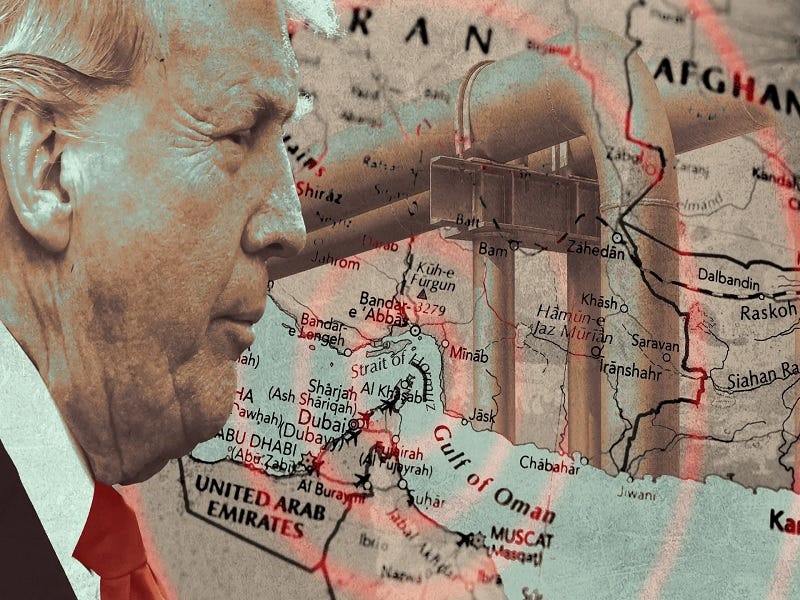
Of these four, the relatively least bad from the perspective of Trump 2.0’s interests are talking and escalating, the first if its interests are taken at face value and the second if ulterior ones are at play.
The Economist argued over the weekend that “Donald Trump has four bad options for the war in Iran”: talk, leave, continue, or escalate. In the order that they were mentioned, the drawbacks to talking are that the Iranians distrust the US after being attacked twice already during talks, the US might wonder whether any interlocutor still exists that can speak for Iran, the mediator is unclear, and neither side wants to make concessions. Unmentioned, however, is that Russia or India could realistically mediate.
As for leaving, while Trump might be tempted to declare victory and “give the oil-price shock seven months to abate before the midterms in November”, Iran would still retain control of its highly enriched uranium with a “newfound resolve” to build a bomb as well as control over the Strait of Hormuz. Moving along to him continuing the conflict, while more Iranian missiles might be destroyed, more Gulf and Israeli air interceptors would be depleted too. Iran would also continue to control the Strait.
This leaves the escalation scenario of destroying Iran’s energy infrastructure, occupying Gulf islands like Kharg and/or the three Iranian-controlled ones disputed by the UAE, and/or seizing Iran’s highly enriched uranium, but this entails troop losses and the possible destruction of more Gulf infrastructure. Iran might also still resist any deal and instead focus on inflicting maximum harm on its enemies no matter the cost to itself. Objectively speaking, their arguments are convincing, and none of these options are good.
Of these four, the relatively least bad from the perspective of Trump 2.0’s interests are talking and escalating, the first if its interests are taken at face value and the second if ulterior ones are at play. If Trump 2.0 really wants to demilitarize Iran, then it mostly succeeded apart from not fully destroying its missiles. Denuclearization, understood as obtaining Iran’s highly enriched uranium, would then be pursued diplomatically. Regardless of whoever mediates, Russia would likely play a role in the endgame.
In exchange for Russia taking Iran’s highly enriched uranium with its consent, the US would end the conflict (telling Israel that it’s on its own if it doesn’t stop too) and withdraw its forces from the Gulf Kingdoms, with this occurring in sync with Iran reopening the Strait. Russia’s long-proposed Collective Security Concept for the Gulf would then fill the regional security void. If Trump 2.0 has ulterior motives, however, then it might escalate (possibly without boots on the ground) to catalyze a new world order.
Iran’s destruction of Gulf infrastructure would destroy the global economy, likely resulting in years of instability in Afro-Eurasia (Russia being the exception), while the US would insulate itself by retreating to “Fortress America”, where it might even thrive due to the hemisphere’s resources, markets, and labor. There’d predictably be some shocks to the US economy, but everything would be much more manageable for the US than for everyone in the Eastern Hemisphere, especially the US’ Chinese rival.
Of course, it’s also possible that Trump 2.0 has been improvising since the start, whether as part of a “flexible strategy” (including elements of the “Madman Theory” therein) or after epically miscalculating that Iran would capitulate to the US’ demands within days. If that’s the case, then the best solution would be the diplomatic one where the US would settle for less in exchange for not throwing the world into turmoil, which risks the worst blowback ever no matter how insulated the US might think that it is.
A cynic might conclude that the US has sidelined its main LNG competitors through the Ukraine and Iran "special operations", while hobbling it's global industrial competitors via high energy prices.
> Unmentioned, however, is that Russia or India could realistically mediate.
I'm very skeptical that anyone can mediate between Trump and anyone else.
This issue is not skill, or relationships. The issue is that Trump is duplicitous.