

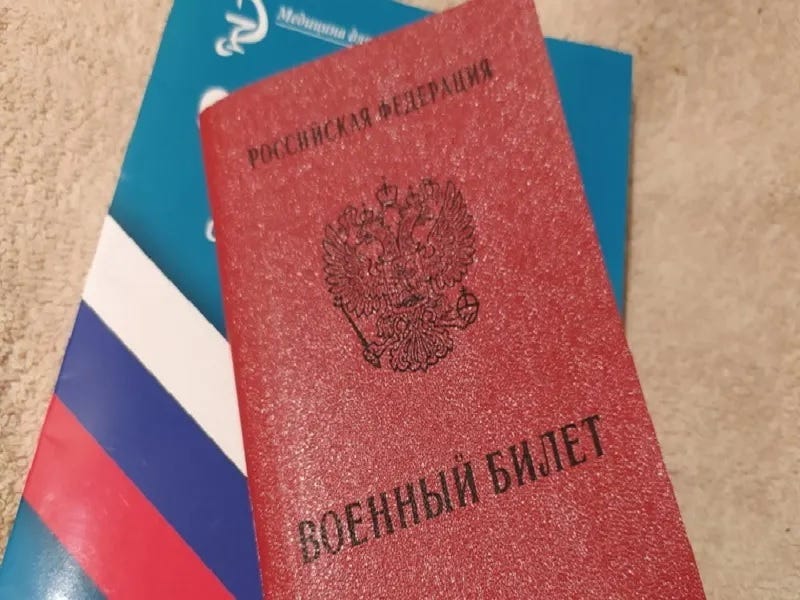
Mobilization would most likely only be declared to exploit an impending breakthrough across the front, but the EU is expected to spin any such move as an impending Russian attack in order to advance its elite’s goals.
The Telegraph recently claimed that Putin is preparing a “stealth mobilization” whereby administrative preparations are allegedly being made in the event that he decides to declare mobilization. The essence of these rumors isn’t new, and Putin responded to them in early September by saying that “There is no such scenario as of today that would require a mobilisation. This is an information attack on behalf of the enemy on the eve of the elections to the State Duma in an attempt to influence their results.”
Both parts of his statement are true, but it can’t be ruled out that circumstances might change, in which case it’s worthwhile analyzing the scenario in which mobilization might occur and how the EU might respond. “Russia’s Locomotive Strike Campaign Threatens To Cripple Ukraine’s Military Logistics” if carried out systematically from now through the coming winter and paired with equally systematic strikes against its gas stations, ports, power plants, and other infrastructure.
If Russian military planners come to believe that this might lead to their long-awaited breakthrough across the front, then they might advise Putin to at least do what he did four years ago by declaring the partial mobilization of experienced reservists for exploiting any such breakthrough. The goal would be to apply more military force at this strategically advantageous moment for coercing Ukraine into complying with all of Russia’s demands, or at least as many as possible, for ending the conflict in a Russian victory.
That’s a reasonable scenario in which at least a partial mobilization might be declared, the possibility of which European NATO (E-NATO) is already arguably preparing for in advance, ergo the recent hysterical fearmongering about an impending Russian attack against several of the bloc’s members. In light of the rapidly shifting military-strategic dynamics of the conflict brought about by Russia’s previously mentioned systematic strike campaign, this narrative can in hindsight be interpreted as preconditioning.
The purpose is to manipulate average folks into perceiving any partial mobilization as preparation for a Russian invasion of the Baltic States and/or Poland, which Putin has said that he has no interest in, and it wouldn’t make sense for him to risk World War III in pursuit of occupying hostile populations anyhow. Nevertheless, this preconditioning could be paired with a false flag (in Poland?) to either justify a dangerous escalation by E-NATO against Russia or accelerate the EU’s military-political centralization.
E-NATO’s ruling liberal elites are being challenged by their conservative oppositions like never before amidst the economic decline caused by surging fuel prices that are due to the anti-Russian sanctions and the Third Gulf War’s disruption of the global energy market. They therefore have an interest in maximally fearmongering about Russia to at minimum rally voters around them while further centralizing the EU and even dangerously escalating against Russia in the most extreme scenario if that fails to help them.
To recap, mobilization would most likely only be declared to exploit an impending breakthrough across the front, but E-NATO is expected to spin any such move as an impending Russian attack in order to advance its elite’s goals. A false flag might even occur to make this narrative more believable. Before E-NATO dangerously escalates against Russia on that pretext, however, it should recall Lavrov’s words that any war between them “will be very short” in an allusion to Russia nuking E-NATO in self-defense.
An interesting read Andrew. It has me wondering what false flag could be both large enough to bring about a change in public opinion in the E-NATO countries but also not so large as to be obvious that it wasnt Russia that did the deed.
Doubtless a couple of Russian passports will be found in the aftermath but would that be enough to bring the public on board?
From what I read & hear Russia already has ample troops in reserve... ready & trained... if they wanted to surge on the frontlines. But I think it is highly unlikely Russia would resort to such tactics since the remaining tasks mainly involve urban sieges which cannot be accomplished by infantry assaults without taking heavy losses. In my opinion Russia will use the same bombardment & attrition tactics they have used up to now.
There are good reasons why Russia has used these tactics... and not just military reasons. What is happening in Ukraine has significance far beyond Ukraine... global significance... it is not just about Ukraine. One reason for the relatively slow grinding strategy Russia has adopted is to give the West time to adjust to the coming defeat in Ukraine... a defeat which is not the cause but the rather the consequence of global changes which are emerging. The defeat of the West in the Gulf is another consequence of these global changes.
I feel certain President Putin understands the grave dangers the world faces as these global changes become manifest & undeniable... the danger of the West panicking and triggering a global conflagration in an attempt to halt & reverse the changes and regain global dominance. Anyone paying attention to Western political and pundit rhetoric can be in no doubt that is the dominant current mindset among Western elites circles. We have to hope the West can come to its senses in time to avoid a global catastrophe.
The era of Western global dominance is over... the world has changed. The West can choose to join the rest of the world as a peer... or persist in delusions of exceptionalism & supremacy from which global war will inevitably follow. I know which path I want the West to take.