


Lithuania’s Provocative Remark About Kaliningrad Doesn’t Equate To A Territorial Claim

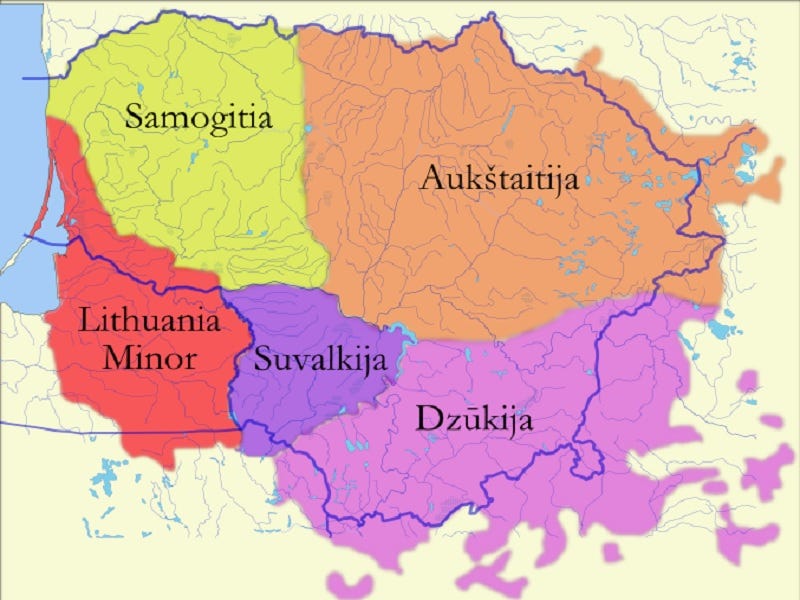
Referring to places by the names that a certain group once used doesn’t automatically imply territorial claims, though it can be interpreted as such depending on the context, but it’s also understandable that the current inhabitants might consider it provocative if they now describe those places differently.
Kremlin spokesman Dmitry Peskov reacted to Lithuanian President Gitanas Nauseda’s remarks on X describing Kaliningrad city as “Karaliaucius” and its oblast/region as “Lithuania Minor” by declaring that “Lithuania is an unfriendly, hostile state to Russia, and, among other things, it turns out that this country has territorial claims against us. This justifies our deep concerns and validates all current and future actions to ensure Russia’s security.” For context, here’s exactly what Nauseda wrote:
“What comes next? The burning of books?
Russia's decision to rename a museum dedicated to Kristijonas Donelaitis, a classic of Lithuanian literature, is yet another unacceptable attempt at rewriting history.
Even though the old inhabitants of Lithuania Minor, now part of the so-called Kaliningrad Oblast, are long gone, the last signs of Lithuanian culture there must be safeguarded.
No matter how hard Russia tries, Karaliaučius will never become Kaliningrad!”
His post was in response to reports that the “Kristijonas Donelaitis Memorial Museum” in Kaliningrad Oblast’s Chistye Prudy village near the Lithuanian border had silently been renamed the “Literature Museum”. Donelaitis is regarded as the father of Lithuanian literature and lived in what some historically referred to as the “Lithuania Minor” region of erstwhile East Prussia, the vast majority of which then became Kaliningrad Oblast after World War II while a sliver remains in Lithuania proper.
Referring to places by the names that a certain group once used doesn’t automatically imply territorial claims, though it can be interpreted as such depending on the context, but it’s also understandable that the current inhabitants might consider it provocative if they now describe those places differently. Examples other than the examined one include Poles using their historical terms for areas of the former Commonwealth and Russians doing the same for areas of the former USSR and even Empire.
In this case, Nauseda had a predictably nationalist reaction to Russia’s reportedly silent renaming of that museum, which the authorities might have chosen to do as a long-delayed response to Lithuania’s removal of Soviet-era monuments. The important difference though is that while Lithuanians can now easily visit Russia (including that museum in Kaliningrad Oblast) with an e-visa, Russians cannot easily visit Lithuania to see the nearly 100 Soviet-era statues that were moved to Lithuania’s Grutas Park.
Visiting a museum in a neighboring country dedicated to one’s national poet who’s the father of their literature isn’t the same as seeing statues in a neighboring nation to one’s soldiers who liberated the locals (almost all of whom were ethnically different than one’s own people) from the Nazis. Nevertheless, the point is that Russia allows Lithuanians that privilege just like Lithuanians, Belarusians, and Ukrainians allow Poles visa-free access (each under different regimes) to visit their historical sites.
The only anomaly is Lithuania and other EU states that don’t allow Russians the right to visit some of the sights that their own soldiers, some of whom might have even been their ancestors, liberated from the Nazis and for which they were memorialized during the Soviet period. On the topic of liberation, some of these same European people as well as many modern-day Ukrainians don’t consider the Soviets to be liberators, though they might still appreciate that the Red Army stopped the Nazis’ genocides.
These views are at the core of the regional Soviet-era monument scandal of the past few decades, which has at times provoked average Russians into referring to those countries, their regions, and/or cities by their old names (including Imperial-era ones). That’s not the same as if Putin did this, which would be the equivalent of what Nauseda just did, but what matters is that conflicting historical interpretations and naming decisions towards sensitive sites can lead to older names being used for other things.
It’s unimportant whether one supports or opposes the aforesaid trigger factors since all that matters is acknowledging that specific actions can provoke the reaction of someone – whether an average person and/or foreign official – once again referring to a place by the name that a certain group once used. This shouldn’t be equated with a historical claim unless such is explicitly stated by a political authority in connection with the use of such rhetoric. The preceding standard should be applied equally too.
The reality though is that there’ll always be double standards since political authorities and average folks feel proud when referring to places by the names that they once used or might still use instead of the internationally recognized ones while objecting when others do the same to places in their countries. This also holds true for new naming conventions like Trump’s proposal to change the Gulf of Mexico to the Gulf of America. It only becomes problematic if there’s an official desire to change the borders.
Lithuania is advised against even remotely flirting with such intentions due to the fact that it was only through Stalin’s unilateral efforts that its eponymous people came to control Vilnius after World War II. Russian Foreign Ministry spokeswoman Maria Zakharova reminded Nauseda of this on Telegram, but it should also be added that Vilnius had been majority-Polish for centuries, ergo Warsaw’s claim to it after World War I and why Jozef Pilsudski orchestrated Lucjan Zeligowski’s fake mutiny to seize control of it.
In fact, from the Polish perspective, it was the pre-Soviet Bolshevik’s capture of Vilnius in early 1919 (the USSR wasn’t formed until three years later) which signaled the revolutionaries’ expansionist intentions that then led to the events more widely known one year later as the Polish-Bolshevik War. That conflict climaxed with the “Miracle on the Vistula” where Poland defended itself from a full-fledged Bolshevik invasion that aimed to reach Germany and then responded with a crushing counteroffensive.
Vilnius only became majority-Lithuanian, the national identity of which only formed from the mid-19th century as documented by Timothy Snyder in his 2003 book on “The Reconstruction of Nations” (his academic contribution can be appreciated without agreeing with his current views about Russia), after World War II as a result of Soviet-initiated “population exchanges” (deportations). Prior to that, Vilnius had been a cradle of Polish Civilization since the 1385 Union of Krewo with the Grand Duchy of Lithuania.
It's beyond the scope of this analysis to dive further into that period’s history but what was shared above should be sufficient for informing the reader of why it would be unwise for Lithuania to open Pandora’s Box. Nothing is being implied about Poland allegedly plotting to recapture Vilnius and its surroundings, the latter of which is where the bulk of Lithuania’s Polish minority live (they’ve been indigenous there for centuries), just that it could lead to a large-scale reaction on social media from Polish nationalists.
With few exceptions that should be treated individually on a case-by-case basis, it’s oftentimes better to keep borders as they are even if a government and/or society prefer to refer to places outside of their own with their historical names, whether generally, to provoke their neighbor, or in response to something they said or did. In the case of Nauseda describing Kaliningrad as “Karaliaucius” and “Lithuania Minor”, this isn’t a territorial claim, which will hopefully keep tensions manageable.
Kaliningrad or Kiningsbur or Krolewiec never was Lithuanians. Lithuanian president must be stupid, uneducated or making lies, or maybe all 3 at once
One shouldn't forget that the Southern 70% of the current Lithuanian littoral was East-Prussian Memel-Land. Versailles treaty in 1919 mandated that it were to be ceded to Lithuania even though 70% of the inhabitants were German speakers. On the map, it's the Northern part of the "Lithuania Minor" shown in red. In March 1939 it was ceded back to Germany. Only after Soviet Union captured East Prussia in 1944/1945 was the territory transferred under right of conquest to its component Lithuanian Soviet Republic. Potentially, Russia could claim it back...