

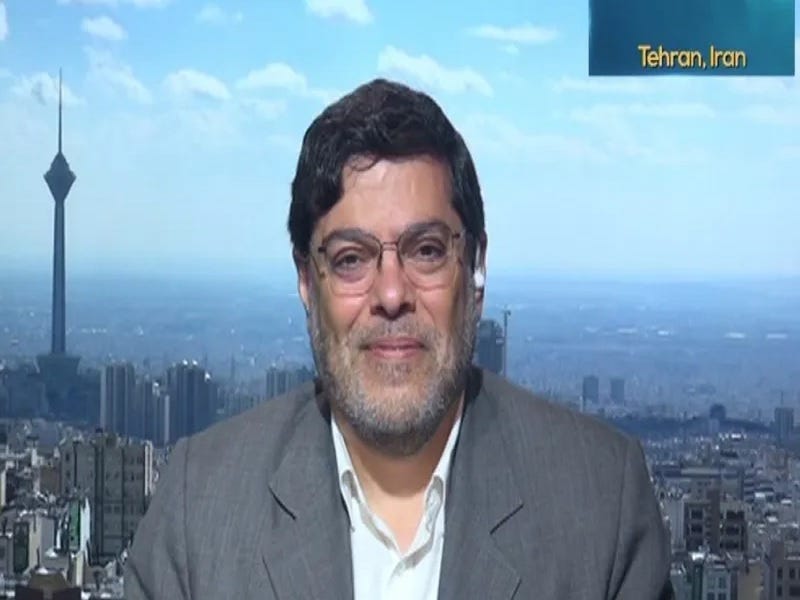
State-adjacent and even outright state-backed folks like him don’t always perfectly channel state views since they still retain their agency, though they’re still regularly misperceived as being puppets.
Iranian President Masoud Pezeshkian said during a call with his Turkish counterpart Recep Tayyip Erdogan that “We appreciate Türkiye’s position in condemning the brutal attacks against Iran, and especially the impressive solidarity of the Turkish people with Iran.” This follows his Foreign Minister tweeting in mid-March that “The prayers of the brotherly Turkish nation and the solidarity shown by the friendly Republic of Türkiye for the Iranian people are a great source of strength and morale for us.”
In between both of them, Iranian-American Professor Seyed Mohammad Marandi sparked a major scandal on social media by tweeting that “Erdogan is a junior partner in the Epstein Coalition”. He then tweeted that “Instead of sacrificing young Turkish soldiers for the despot in Qatar who helps murder Iranian women and children, Erdogan should respect the demands of the Turkish people, stop the flow of oil to Netanyahu, shut down US and NATO bases, and break off ties with the Zionist regime.”
The reason why this was so scandalous is because he informally assumed the role of Iran’s media spokesman throughout the course of the Third Gulf War. To be clear, he’s not a government official, but the authorities allowed him to use the internet to give interviews to a wide array of foreign media during the nationwide internet shutdown during the conflict. Therefore, many Turks interpreted his attacks against their country’s leader and his foreign policy as state-approved, but it was never that simple.
The reality is that Marandi was always speaking in a personal capacity even though he informally represented his government when talking to foreign media during the war. Their decision to grant him internet access shouldn’t have been misperceived as him perfectly channeling all of their views. As can be discerned by watching him, he doesn’t read from a script but speaks naturally since he truly believes everything that he says. This alignment of views is why he was allowed to use the internet for interviews.
Extrapolating from this insight, the same can be said about state-adjacent “Non-Russian Pro-Russians” (NRPRs), which refers to those who are platformed by publicly financed Russian media, hosted by publicly financed entities for conferences, and/or have visited Donbass (which requires state approval). They’re embraced by the state because their views independently align, not because they perfectly channel all of their views, let alone supposedly read and/or post from a script. They all still have agency.
It’s this agency that was responsible for Marandi’s scandal since many Turks mistakenly assumed that his posts were state-approved. Likewise, others might have mistakenly assumed that state-adjacent NRPRs speak on behalf of Russia whenever they say or post something scandalous. To be sure, Russia’s “soft power supervisors” decline to discreetly nudge them to realign their views more closely with Russian policy per the “Potemkinist” approach, but this isn’t the same as prior approval for whatever they do.
As regards Marandi’s case, he didn’t obsess over Erdogan after his posts sparked a scandal, thus suggesting that he either decided on his own to move on or might have been discreetly nudged by the state to do so. In any case, Pezeshkian’s recent post should put to rest any speculation about whether Marandi was posting on behalf of Iran, with the lesson being that state-adjacent and even outright state-backed folks like him don’t always perfectly channel state views since they still retain their agency.
Erdogan nees to realize that NATO, Israel , USA are not his friends. Turkeiy needs to know that they are part of the Misddle East and the 3 mentioned are enemies of the Middle East.
Erdogan dances on various sides and his remarks change like the wind in the weather.