
Pakistan’s Missile Program Is Back In The US’ Crosshairs

The “golden age” of US-Pakistani ties that began with Trump’s return is now over after the US reached its interim trade deal with India.
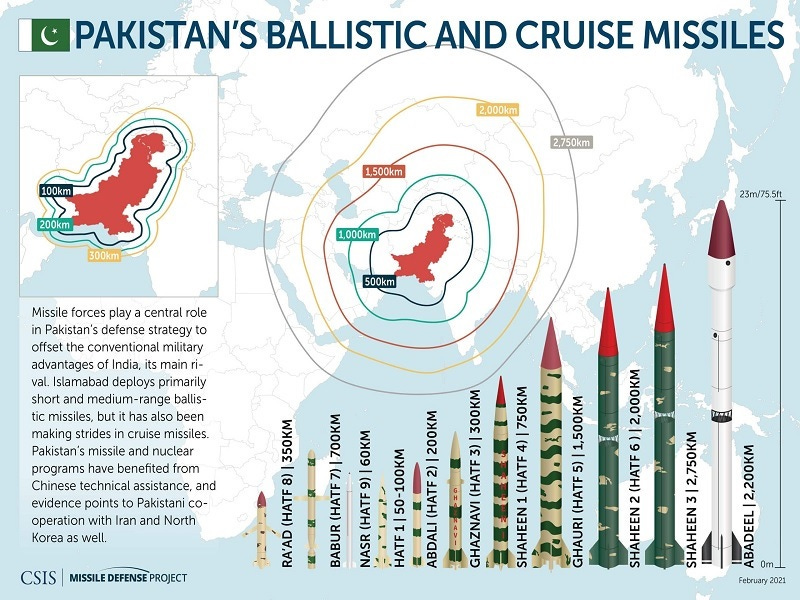
Director of National Intelligence Tulsi Gabbard told Congress last week that “Russia, China, North Korea, Iran and Pakistan have been researching and developing an array of novel, advanced, or traditional missile delivery systems with nuclear and conventional payloads that put our Homeland within range…Pakistan’s long-range ballistic missile development potentially could include ICBMs with the range capable of striking the Homeland.” This shocked Pakistan after its rapid rapprochement with the US.
Pakistan’s de facto military dictatorship that came to power after April 2022’s post-modern coup against former Prime Minister Imran Khan has behaved very obsequiously towards Trump, in response to which he showered them with compliments that naturally upset their Indian nemesis. Pakistan has even reportedly considered offering the US a commercial port. While ties officially remain strong, the Indo-US trade deal caught Pakistan off guard, thus prompting concern that India regained the US’ regional favor.
Such views are now circulating even more widely after Gabbard’s remarks, which reaffirmed what the Biden Administration claimed in December 2024 when it imposed sanctions on Pakistan’s ballistic missile program. It was argued here that perhaps Pakistan plans to sell its ICBM research and future technology, while former senior officials from the Department of War and National Security Council speculated last summer that Pakistan actually wants to deter a US decapitation strike or intervention on India’s side.
Dr. Rabia Akhtar, who’s a prominent Pakistani nuclear security scholar and a leading figure at the University of Lahore, published a detailed rebuttal to the two aforesaid former officials’ article from Foreign Affairs that can be read here and is worth at least skimming for those interested in this subject. Her argument boils down to Pakistan’s ballistic missile program expanding in response to India expanding its military footprint so as to cover all of its nemesis’ strategic sites in the event of a crisis.
She also argues that “[Pakistan’s] strategy to handle those contingencies (of a US decapitation strike or attempted seizure of its nukes) has emphasised operational secrecy and redundancy of its nuclear arsenal, not threatening America with attack.” That’s reasonable, but from the US’ strategic security perspective – which she describes in this context as “alarmist” and “worst-case” thinking – its expanding capabilities could facilitate a future intent to threaten or target the homeland, which is also reasonable.
Dr. Akhtar’s rebuttal doesn’t touch upon the scenario of Pakistan selling its reported ICBM research and future technology, however, which might have influenced Israel’s decision to recognize Somaliland last December as argued here so as to keep an eye on possible Turkish testing sites in neighboring Somalia. This is also a plausible scenario as is the one about deterring the US. What’s most important is that the US is once again drawing attention to Pakistan’s ballistic missile program after a 15-month hiatus.
That in turn suggests that the “golden age” of US-Pakistani ties which began with Trump’s return is now over after the US reached its interim trade deal with India. It can even be argued in hindsight that the US used Trump’s purposely provocative praise of Pakistan over the past year to “bait” India into zeroing out tariffs on most US goods and services in exchange for restoring India’s role as the US’ regional favorite. If that’s correct, then the US might take a harder line towards Pakistan, thus reversing the past year’s gains.
Pakistan will learn a lesson about US priorities, a lesson it should have learned earlier from the North Korean and Iranian experiences. If you develop nuclear forces make sure your missiles cannot reach America. It is actually best for you if you do not even bother with nukes as it is easier to walk over you later whenever needed. This just might mean that the Pakistani US proxy dream is over and the country goes back to be sandwiched between India and Afghanistan, two hostile states toward it.
In addition Pakistan is a Muslim nation and that is a BIG BLACK mark against that nation from America.
USA has to deal with all the turmoil in the world. Russia sits back and sees its power & influence grow. America's errors have resulted in benefiting Russia. Maybe at some time America will realize that being friends with Russia would be a benefit to both countties. The 2 super powers walking side by side.