
What Foreign Policy Options Does Pakistan Have After The Indo-US Trade Deal?

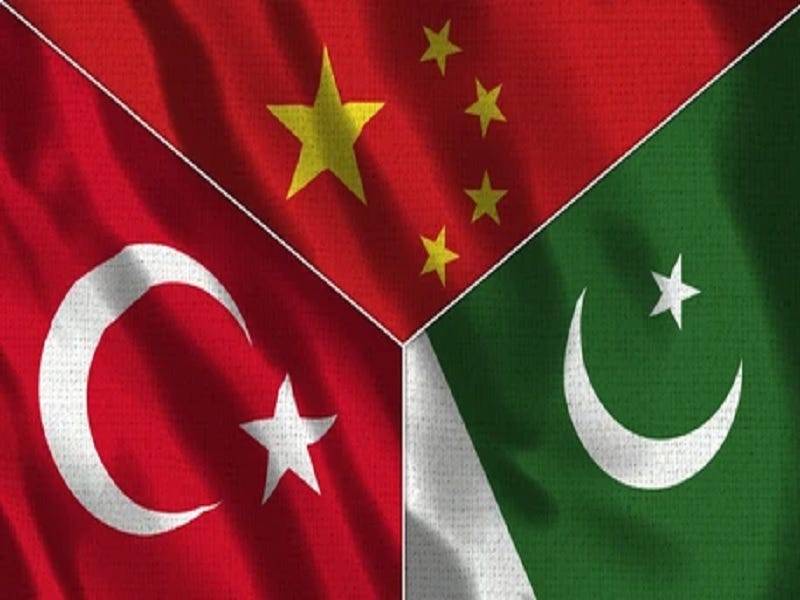
The most likely one is that Pakistan carefully recalibrates from its hitherto disproportionate dependence on the US back to China, albeit without worsening ties with the US, and then balances China with Turkiye as co-patrons.
“Pakistan & The US Might Reassess Their Newly Restored Strategic Partnership” after the Indo-US trade deal for the reasons explained in the preceding hyperlinked analysis, namely that they no longer share a common interest in jointly containing and possibly even “Balkanizing” India. The US’ tangible stakes in India’s security and prosperity make it unlikely that it’ll continue with this approach. Bereft of the basis upon which their strategic partnership was restored, Pakistan now has three main foreign policy options.
The first is to subordinate itself even more to the US in a desperate attempt to retain its position as the US’ top regional ally or at least be treated equally with India. This would require giving the US preferential access to more critical mineral deposits, each of which China would then be deprived of, possibly even going as far as breaking contracts with China. Pakistan would risk becoming too dependent on a newly India-friendly US and ruining ties with China, however, so this probably won’t happen.
The second is to implement major reforms for finally giving Pakistan the political-economic foundation that it requires to stabilize and grow without being anyone’s junior partner. Its de facto military dictator, Field Marshal Asim Munir, is opposed to that since it would remove the power of the armed forces and intelligence services over the government and economy. This foreign policy option is thus unlikely without a de facto revolution of the kind that only Imran Khan, who’s still in jail, is capable of leading.
The third option is the most likely and it’s that Pakistan carefully recalibrates from its hitherto disproportionate dependence on the US back to China, albeit without worsening ties with the US, and then balances China with Turkiye as co-patrons. Pakistan can advance Chinese regional interests through trilateral coordination with Bangladesh against India, possibly including a mutual defense pact, while advancing Turkiye’s through support for its expansion of influence in Central Asia at Russia’s expense.
Through these means, the emerging Chinese-Pakistani-Bangladeshi trilateral could threaten India’s Northeast States, which are practically exclaves due to only being connected to “mainland India” by the narrow “Chicken’s Neck”. Their geographic uniqueness and lagging economic development relative to the rest of India could lead to any conflict there being comparatively more manageable than others, thus potentially not endangering new US investments and consequently not worsening their ties with the US.
In fact, Turkish-directed Pakistani involvement in Central Asia – most realistically by helping Russia’s CSTO allies diversify from their security dependence on it via arms exports, regular drills, and/or military advisors – could please the US aiding Russia’s containment. This scenario was elaborated on here as regards Kazakhstan. If Pakistan’s Hybrid War on India continues, including in collusion with China and/or Bangladesh, then this outcome could balance out the US’ disapproval thereof.
With this in mind, Pakistan will most likely continue dangling its critical minerals opportunities before the US (but with clear limits in terms of how far it’ll go) together with trying to tempt Trump into returning US troops to Afghanistan’s Bagram Airbase like he earlier said that he wants to do. At the same time, it’ll probably also work with China and Bangladesh to contain India (whose threat assessment all three share) and Turkiye to contain Russia in Central Asia, with the latter role keeping Pakistan in the US’ favor.
Pakistan finds that dependence on USA is not necessary. There are many alternatives, China, Russia, Turkiye ,Iran. Just take the partner that suits you best as the occassion changes.
Andrew, you say that Pakistan belongs to a kind of muslim NATO?
What do you mean by muslim NATO?
Thank you