
Azerbaijan’s “Multi-Vector Alignment” Poses A Serious Challenge To Russia

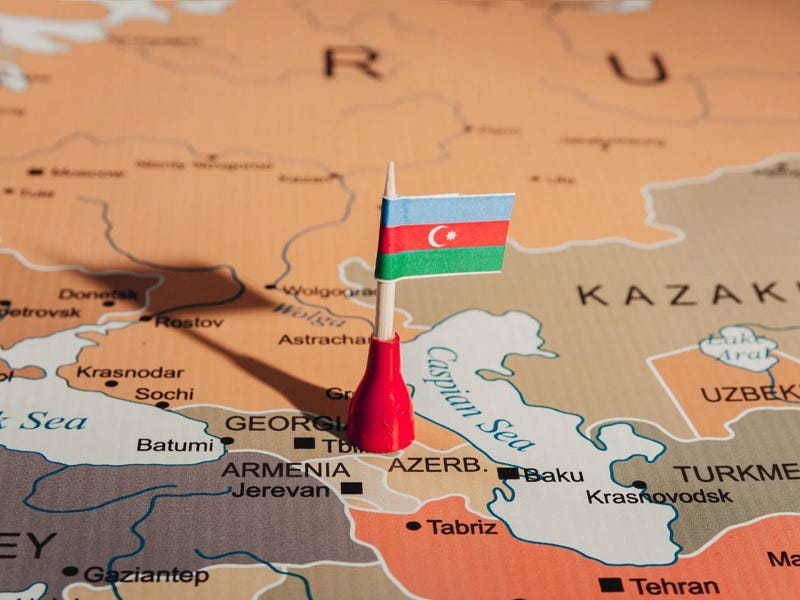
The “Trump Route for International Peace and Prosperity” is poised to become a military-logistics corridor for expanding NATO influence along Russia’s southern periphery and could thus force Putin into the zero-sum dilemma of accepting this or authorizing military action in an attempt to preempt it.
Valdai Club Programme Director Timofei Bordachev recently published an insightful piece asking whether former Soviet Republics are moving “Towards Genuine Multi-Vector Alignment?” This is described as “systematic efforts to create and maintain, insofar as possible, balanced and mutually beneficial relations with different global centres of power and regional actors, without obvious orientation towards any single bloc, and relying on tactical maneuvering to ensure security and achieve core development goals.”
He claims that “The fact that this habit began to take shape (among the post-Soviet states) through opposition to traditional Russian influence could be regarded as an ‘inevitable evil’ which, in essence, could not inflict truly fundamental damage on Russia…Today, however, the management of multi-vector alignment may confront Russia’s neighbours—and, one step further, Russia itself—with new challenges.” These include US coercion and “a readiness to significantly enhance one’s status in regional affairs.”
Bordachev didn’t name any of the post-Soviet states other than Russia in his article, but the argument can be made that his concerns are most relevant with respect to Azerbaijan. Its decision to replace Russian mediation with Armenia with American mediation, agree last August to the “Trump Route for International Peace and Prosperity” (TRIPP) which replaces Russia’s envisaged regional corridor and role therein, and the outcome of Vance’s recent trip there collectively pose a serious challenge to Russia.
All of these moves are framed by Azerbaijan as part of what Bordachev describes as the “multi-vector alignment” policy, which is factually correct. It’s also true what he wrote about how “signalling one’s own foreign-policy autonomy and the capacity to make decisions based on national interests as shaped by domestic political development” is “by no means objectionable”. The problem therefore rests in this policy’s practical implementation by Azerbaijan in the current geostrategic context of the New Cold War.
Trump 2.0 is tightening the West’s encirclement of Russia in an attempt to coerce Putin into concessions in Ukraine that would leave unfulfilled the maximalist national security goals of the special operation. That was the purpose of Vance’s trip to the South Caucasus as was explained here. Azerbaijan now functions as a launchpad for expanding US economic, political, and inevitably, military influence across the South Caucasus, the Caspian Sea, and Central Asia, which is Russia’s entire southern periphery.
Nearby Kazakhstan, which announced in December that it plans to produce NATO-standard shells, might soon be emboldened to more openly defy Russia in Azerbaijani-inspired ways that challenge its security interests even more seriously under the pretext of implementing its own “multi-vector alignment” policy. This risks replicating the NATO-Russian security dilemma that ultimately led to the special operation when it became unmanageable, except this time along two southern fronts at once, Azerbaijan and Kazakhstan.
Azerbaijan’s “multi-vector alignment” policy and consequent “readiness to significantly enhance [its] status in regional affairs”, albeit at the expense of Russia’s security interests, is responsible for setting this scenario into motion. TRIPP is poised to become a military-logistics corridor for expanding NATO influence along Russia’s entire southern periphery so Putin might therefore soon be forced into the zero-sum dilemma of accepting this encirclement or authorizing military action in an attempt to preempt it.
Russia can not be defeated it is a nuclear SUPER POWER. The chaos in the middle east has a much greater impact on the USA then Russia. USA is fighting there, Russia is not involved in anty fighting there. The war in Ukkraine will in time be a Russian victory. Russia will not allow Ukraine to join NATO or allow any foreign troops on a tertitory it considers it's own. Russia has an1800 mile with Ukraine.
favorable for the construction and security of trade corridors through the Caspian area is the end of the Ukraine war and surrender of aggression against Iran. that would provide incentive for Turkiye to cooperate with Russia, Iran and China rather than American in constructing trade infrastructure and working with Georgia, Armenia and Azeris to protect it. The temptation of any Arab, Turkic or Christian country on Iran's periphery to join aggression should be fought against with every effort to bring about surrender of aggression, weakening of American retrogressive and far flung intervention in the region, and securing construction of trade corridors.