
Western Officials Should Listen When Trenin Of All People Warns Of Russian Escalation

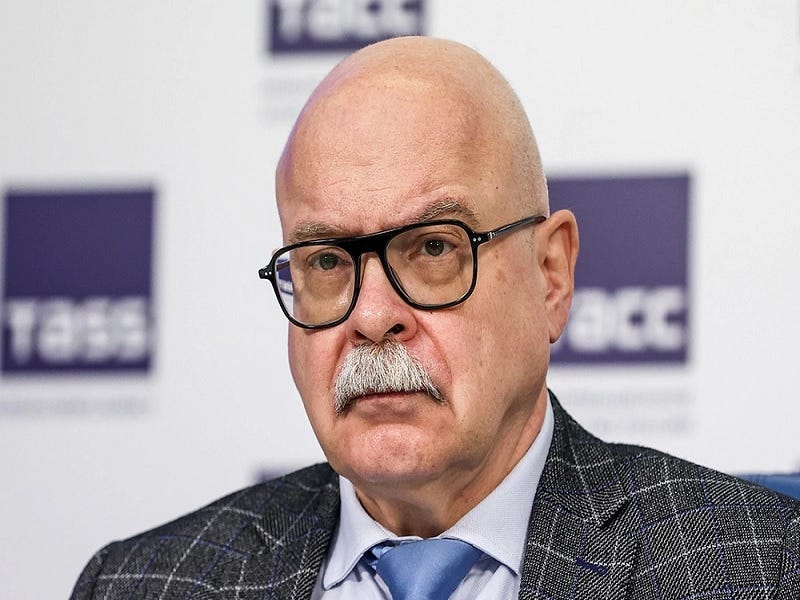
He’s not a hawk in the least and actually used to be one of his country’s most well-known Western-friendly experts before the special operation led to him gradually re-evaluating his worldview.
President of the Russian International Affairs Council Dmitri Trenin published a piece at RT about “The dangerous logic of NATO 3.0”. In his assessment, “The Europeans dream of eliminating Russia as a serious factor in the geopolitics of Eurasia: to them, this would mean the ‘final solution’ of the long-dreaded ‘Russia problem.’…The fundamental flaw of European thinking is their belief that Russia would rather accept defeat, degradation and disintegration than use the arsenal which it currently possesses.”
He elaborated that “This arsenal is not limited to nuclear weapons, although the point may be reached when they will have to be used. The Kremlin, so far, has been exceedingly restrained in using its more powerful conventional capabilities, or engaging some high-value, high-visibility targets. There are many explanations for such restraint, but it is foolhardy – actually, fatal – to believe that either the Russian leadership or the Russian people would ever surrender to NATO.”
Trenin isn’t a hawk like internationally (in)famous Sergey Karaganov is, so he’s not among those whom Putin powerfully rebuked last month for calling on Russia to attack Europe. He actually used to be one of the most well-known Western-friendly experts in the country before the special operation led to him gradually re-evaluating his worldview and becoming extremely critical of the West. Western officials should therefore listen when Trenin of all people warns of Russian escalation.
As for his related warning about the threat that Europe now poses to Russia, it was Dmitry Medvedev who first talked about this in early May when warning about Germany’s remilitarization, which also became Ukraine’s most significant military patron behind the US shortly beforehand. It was concluded here at the time that Germany and the EU in general might soon be perceived by Russia as a greater threat than the US. Trenin now confirmed that this is the case when it comes to his compatriots.
In his words, “Whereas in the days of the Cold War NATO appeared to Russians as ‘America in Europe’, now when they look at NATO, they see Europe backed by America.” Given the German-led EU’s bellicosity against Russia, which is emboldened by the “NATO 3.0” concept of empowering the bloc to confront Russia on its own with the US as the “back sea driver” as Trenin described it, it’s little wonder that Russia is bracing for a clash with NATO around 2030. Only the EU’s self-restraint could prevent this.
Ukraine’s new “war of attrition” against Russia that they’re fueling together with the US through their support of its long-range strikes could eventually inflict significant costs, thus prompting Russia to expand its new “systematic strikes” against Ukraine to the use of tactical nukes to stop the bleeding. As Trenin wrote, Russia won’t ever surrender to NATO, and Putin won’t turn his country into the new “Christ of Nations” by sacrificing it to death by a thousand cuts due to his Christ-like self-restraint up until now.
Trenin's articles are vastly better than those of the sad clowns from Valdai. The West, rather than yielding to its usual hubris, should really pay attention to this particularly worrying point in the public attitude of high-ranking Russian officials. In the West, warlike acts are always preceded by grandstanding statements, terrible chin-jutting, and bellicose fanfares—probable remnants of the era when Celtic, Germanic, or Scandinavian armies used to hurl insulting challenges at each other before engaging in battle (something neither the Persians, nor the Greeks, nor the Romans practiced). Looking at Russian history, this is clearly not their custom. It is when their leaders begin to wear grave, resigned, almost sad expressions that one should be wary. The Russian does not have a cheerful, swaggering way of mounting the saddle. But when he is in the saddle...
You formulate: »The Kremlin [i.e. the Commander in Chief], so far, has been exceedingly restrained in using its more powerful conventional capabilities, or engaging some high-value, high-visibility targets. There are many explanations for such restraint«. At the end you speak of President Putin’s »Christ-like self-restraint«. Yes, it seems clear meanwhile that there is something like this and that such an attitude is not universal among the Russian power elite, but more or less an attitude of the Commander in Chief alone. I would appreciate if you would undertake to explain the realistic reasons that cause »such restraint«. I could think of China as a reason, to split EU-Nato from U.S. Nato may be, to accommodate the West-loving (and even more longing for to be loved by the West) Russian billionaire class. What do you think, Andrew?